BHAKTI FOR BEGINNERS · 82
All cards

On the screen no one was born and no one died — yet the viewer weeps. Look closely, the same is true of you
avidyā — отсутствие знания о своей истинной природе (vidyā = знание)
On the screen no one was born and no one died — yet the viewer weeps. Look closely, the same is true of you
avidyā — отсутствие знания о своей истинной природе (vidyā = знание)
Listen to the lecture
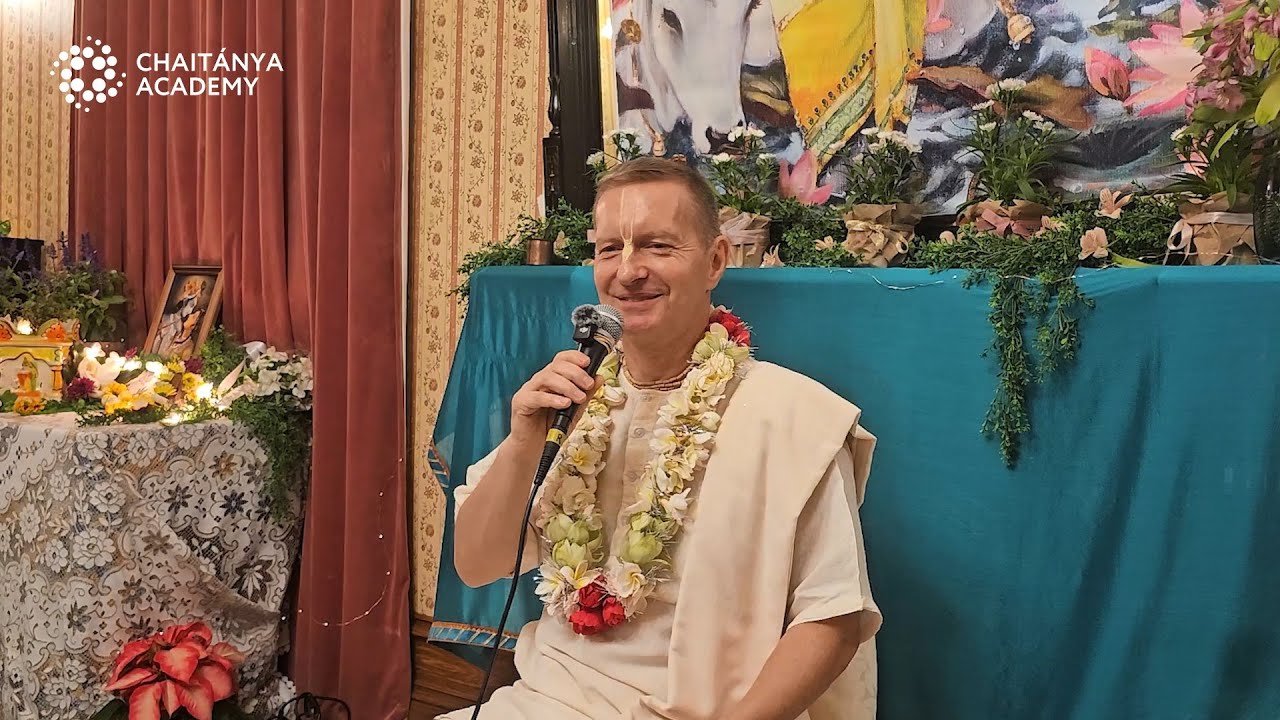
"The hero dies and people begin to cry. Why? Engrossment. But what are they looking at? Three primary colours projected onto a white wall. No one was born, no one died, no one suffered."
A dark hall, a screen, a story. The hero dies and tears run down the viewer's face. But what is actually there? Three primary colours, mixed in different proportions and thrown onto a white wall. No one was born, no one died, no one suffered. People sit in the dark, staring at a wall. Śrī Prem Prayojan Prabhu says the analogy needs no explaining — you all feel it. And that is how the ordinary person lives: in avidyā, without knowledge of who he is. Yet we are ātmā — conscious, immaterial, transcendental to time. We are not born, we do not die; the soul cannot be killed, cut or burned, it is indestructible. There is no danger. There is no death. There is only engrossment.
The one chanting the Name right now was never born and will never die.
Source: How to Find Purpose in a World of Confusion · 2025-04-23
All cards in the deck
Bhakti for Beginners · meditation cards
 Bhakti Cards · Chaitanya Academy