BHAKTI FOR BEGINNERS · 39
All cards
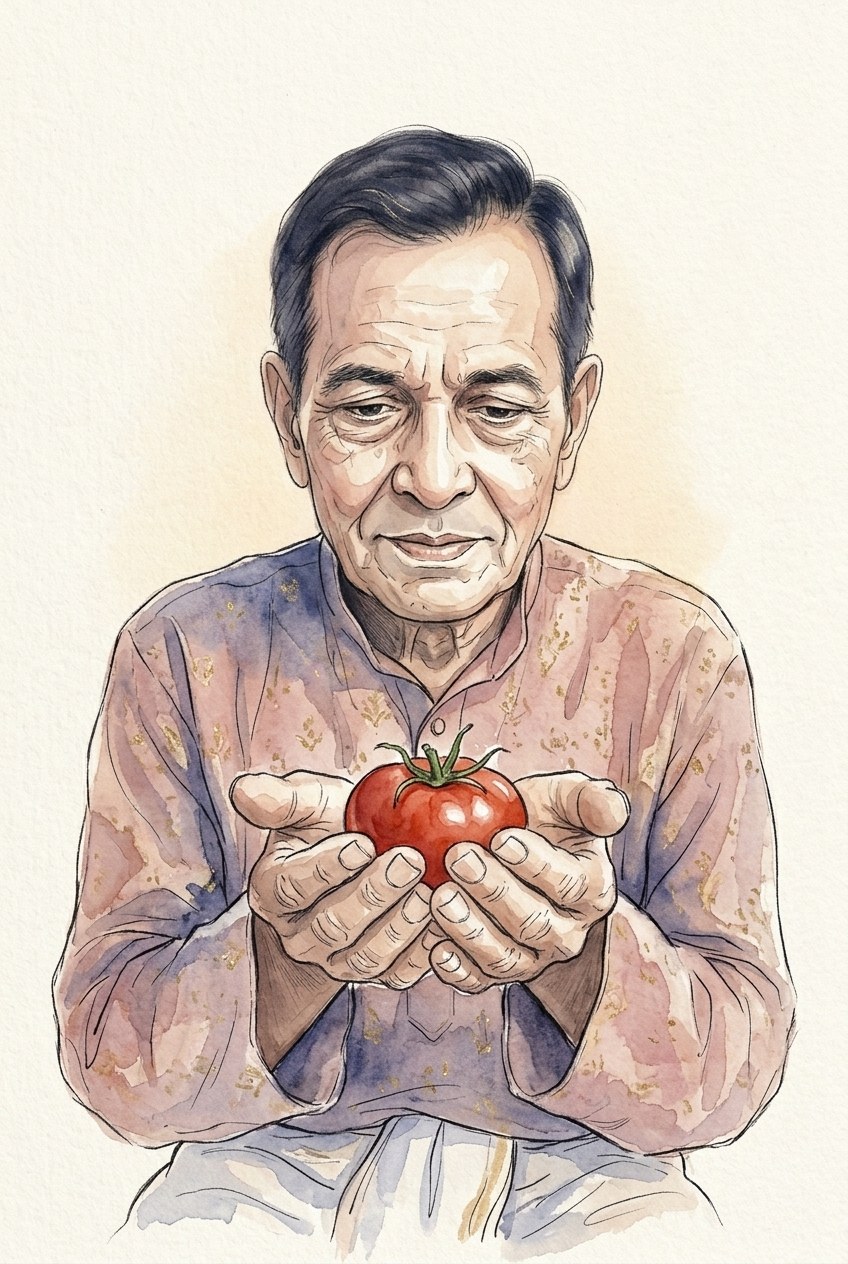
Drop a tomato from a height and there is nothing left to pick up. In a shell that fragile lives the one who never dies
upādhi — временная оболочка-обозначение, принятая за себя (CC Madhya 19.170: sarvopādhi-vinirmuktam)
Drop a tomato from a height and there is nothing left to pick up. In a shell that fragile lives the one who never dies
upādhi — временная оболочка-обозначение, принятая за себя (CC Madhya 19.170: sarvopādhi-vinirmuktam)
Listen to the lecture

"The body is just like a tomato — if you drop it from a height, it's flat, it's very fragile. And for the eternal soul to be identified with this perishable covering is a state of anxiety."
A tomato on the table looks solid until your elbow catches it: one second, and there is nothing left to pick up. Śrī Prem Prayojan Prabhu says the body works the same way. It seems dependable only because it is still intact, yet it is absurdly fragile, and the end can come at any minute. And inside this shell lives the one who never dies — who seriously takes himself to be the shell. Hence the background anxiety almost everyone knows: fear with no cause, simply from carrying something breakable. The shastras call such a borrowed covering upādhi — a temporary designation mistaken for oneself. The lecture notes that when the mind is calm, the two come apart; when it is disturbed, they merge back into one.
Say it over your beads: the shell is breakable. The one inside is whole.
Source: Meditation and Enlightenment · 2025-04-19
All cards in the deck
Bhakti for Beginners · meditation cards
 Bhakti Cards · Chaitanya Academy