THE NECTAR OF VRAJA-LILA · 66
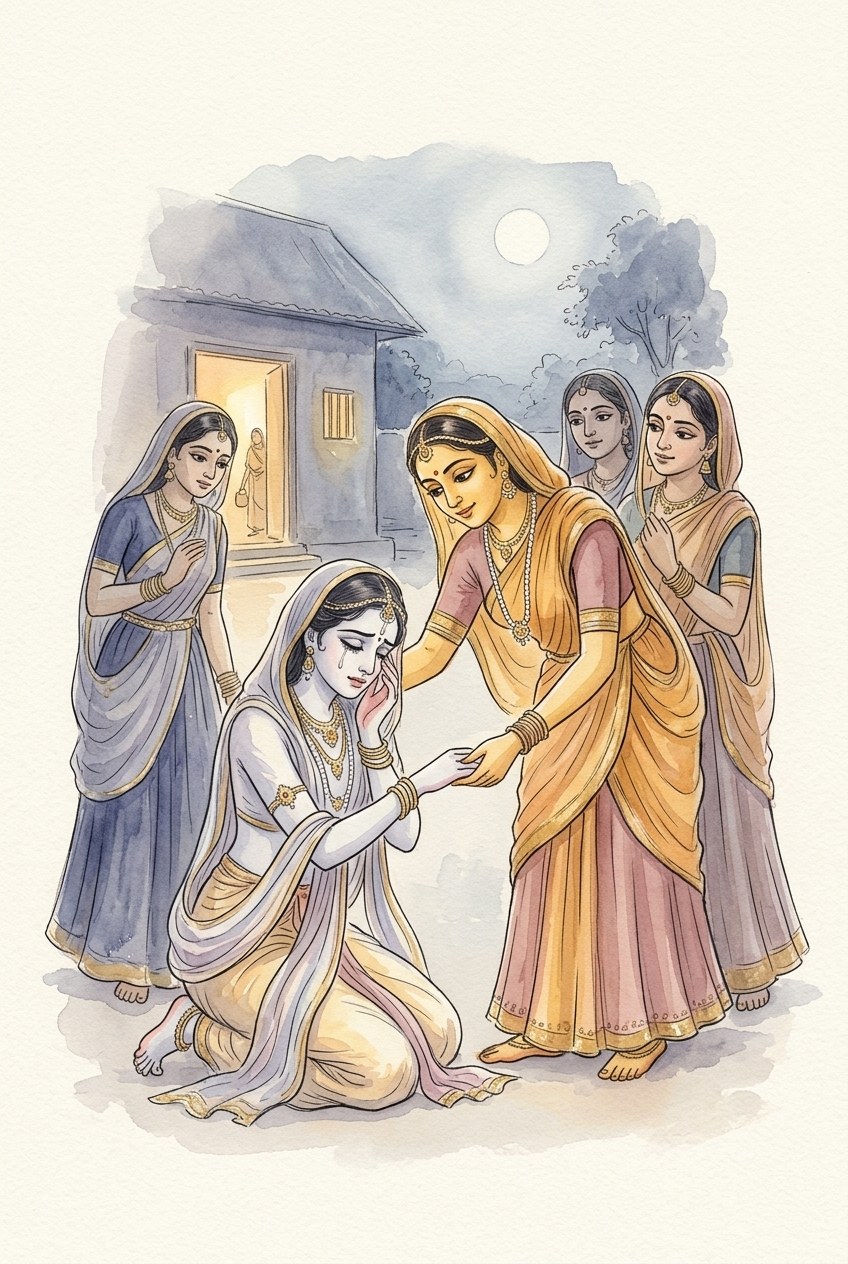
The Weeping Demigoddess
Listen to the lecture
"Love is like a lamp's flame in the heart's cottage: its light shines through the eyes, the face, the cheeks — but never the mouth. So Radhika can never speak it aloud."
Krishna is so greedy to know how deep Radhika's love runs that he stoops to a trick: he disguises himself as a weeping demigoddess and comes to the courtyard of Yavat, crying out pitifully. "Who is that crying?" — "Sakhis, bring that beautiful damsel to me, let me console her grief." They bring her. "Why are you weeping?" And the false goddess bursts out: "I was flying in my chariot and saw that notorious son of Nanda — he abandoned you gopis! Your love is so pure, so perfect — why has this tragedy befallen you?" And Radhika, defending her love, opens her heart: love only grows stronger against obstacles — like the stinging kajal a friend paints on the eyes: it smarts now, but soon comes a shining glance in the mirror. And her listener is Krishna himself. Why the masquerade? Love is like a lamp's flame in the heart's cottage: its light escapes through eyes, face, cheeks, but never the mouth — for the mouth is a door, and pride's wind would blow it out. Radhika can never speak her love aloud, so Krishna must coax it from her.
He'll do anything for a glimpse of her heart — chant, he comes for yours.
Source: Internal Reason Why Sri Chaitanya Mahaprabhu Came to This World · 2024-03-23
All cards in the deck
The Nectar of Vraja-lila · 108 meditation cards
 Bhakti Cards · Chaitanya Academy